Category: Sexual Health

  • Semen Retention Timeline: Day 1 to Day 90+ Guide

    Semen Retention Timeline: Day 1 to Day 90+ Guide

    Semen retention promises a dramatic shift in daily energy, mental focus, emotional stability, and physical performance. Many online communities claim that retaining semen unlocks immediate transformations within days, while traditional critics often dismiss the entire practice as placebo or medical nonsense.

    The biological reality lies right between these two extreme perspectives. Following a structured semen retention timeline leads to predictable physiological and psychological shifts driven by dopamine receptor resensitization, hormonal stabilization, central nervous system recovery, and improved baseline energy.

    This comprehensive guide breaks down exactly what happens to your body and mind from Day 1 to Day 90 and beyond, separating scientifically verified biological facts from internet exaggeration so you can approach your journey with confidence.

    How Semen Retention Works in the Male Body

    When you practice semen retention, your body does not simply store fluid indefinitely until your reproductive system overflows. Sperm cell creation is a continuous, tightly regulated biological cycle managed by your endocrine and reproductive systems, medically referred to as spermatogenesis.

    It takes roughly 64 to 74 days for a newly generated sperm cell to fully mature inside the seminiferous tubules within the testes, according to Cleveland Clinic. Once fully mature, these sperm cells travel through the reproductive tract into the epididymis for temporary storage and final motility development. If ejaculation does not occur within this natural storage window, your body simply initiates an automated recycling mechanism known as phagocytosis.

    During phagocytosis, specialized macrophages and immune cells break down older, unreleased sperm cells into their fundamental chemical building blocks. Key micro-nutrients like zinc, selenium, essential peptides, calcium, magnesium, and bioavailable proteins are reabsorbed directly back into your bloodstream and utilized by other vital tissues throughout your body.

    The liquid component of semen, produced continuously by the prostate gland and seminal vesicles, is either reabsorbed by mucosal tissues or naturally cleared through occasional nocturnal emissions during sleep cycles. To better understand how these biological shifts influence your daily concentration, mood, and mental performance, explore the psychological effects of semen retention.

    The Semen Retention Timeline: Day-by-Day Stage Breakdown

    Understanding what occurs at every milestone along the semen retention timeline helps you maintain realistic expectations, prepare for temporary psychological friction, and navigate critical recovery points without quitting prematurely.

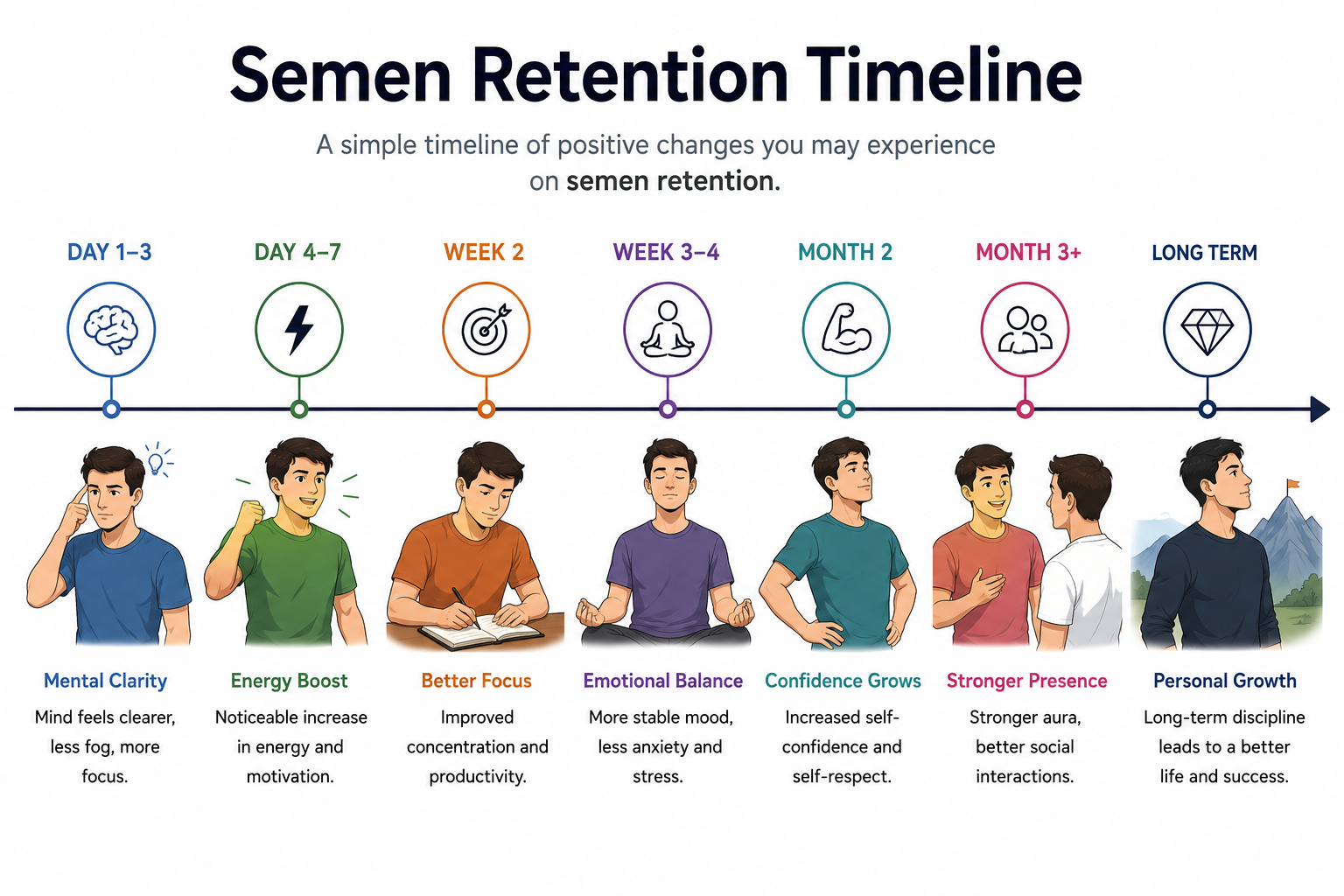
    Days 1–7: The Initial Adjustment & Testosterone Peak

    The first week of semen retention is defined by sharp urge spikes, psychological adjustment, vivid mental chatter, and a well-documented short-term hormonal shift in your endocrine system.

    • Dopamine Withdrawal: Your brain experiences an immediate, sharp reduction in easy, high-dopamine stimulation, which frequently triggers temporary physical restlessness, mild irritability, anxiety spikes, and transient brain fog during the first 72 hours.
    • Serum Testosterone Shift: Some early hormonal research has found a short-term rise in testosterone around day 7 of abstinence, though study results vary and the exact magnitude of the increase is debated among researchers. Any rise tends to stabilize back toward baseline shortly after.
    • Transient Aggression and Drive: Higher temporary androgen activity during this initial seven-day window frequently translates into increased physical energy, a noticeable surge in competitive drive, heightened alertness, and noticeable gym workout stamina.
    • Urge Waves: Physical urges hit in sharp, sudden bursts during evening hours or periods of boredom, as your brain seeks its habitual release mechanism to restore artificially elevated dopamine levels.

    If you want to read more about this week-one endocrine shift, check out our guide on whether abstinence increases testosterone.

    Days 8–14: Dopamine Reset & Mental Clarity Gains

    By the second week of your journey, the initial acute withdrawal symptoms begin to settle into a far more predictable baseline as your neurochemistry adapts to the lack of hyper-stimulation.

    • Receptor Resensitization: Dopamine D2 receptors in the brain’s reward pathway begin upregulating, which makes simple daily activities—such as reading, working on complex tasks, cooking, or walking outdoors—feel noticeably more engaging and deeply satisfying.
    • Improved Sleep Architecture: Many men experience significantly deeper REM sleep cycles, fewer middle-of-the-night awakenings, and easier sleep onset as compulsive late-night screen exposure and evening dopamine spikes subside.
    • Cognitive Working Memory: The reduction in habitual neurochemical fatigue clears persistent brain fog, allowing for longer stretches of continuous deep work, sharper verbal recall, and faster decision-making in professional environments.
    • Stabilized Resting Heart Rate: As your central nervous system steps down from constant autonomic arousal and overstimulation, baseline stress markers and resting heart rates often drop into healthier ranges.

    For a broader perspective on how this recovery timeline compares to general digital abstinence practices, review our detailed NoFap timeline guide.

    Days 15–30: Increased Energy & Behavioral Baseline

    Crossing the one-month mark represents a major milestone where short-term friction transforms into sustained habit consolidation, physical stamina, and marked emotional mood stability.

    • Sustained Daily Vitality: You begin experiencing steady, reliable daytime energy levels rather than the drastic afternoon energy crashes, heavy lethargy, and physical brain fog that typically follow compulsive ejaculation cycles.
    • Emotional Resilience: Improved androgen receptor sensitivity combined with rebalanced neurochemistry makes managing heavy work stress, social anxiety, and unexpected daily friction significantly easier.
    • Controlled Urge Dynamics: Sexual urges remain powerful and frequent, but they no longer feel like uncontrollable, chaotic compulsions; instead, they feel like usable physical drive that can be directed toward constructive real-world goals.
    • Postural and Voice Changes: Many men notice subtle physical changes, including deeper vocal resonance and more natural upright posture, resulting from reduced chronic pelvic floor tension and heightened self-confidence.

    Days 31–90+: Habit Consolidation & Long-Term Psychological Shifts

    Completing 90 full days allows your body to progress through an entire complete cycle of sperm generation while firmly establishing rewritten, resilient neurological habit pathways in your brain.

    • Neurochemical Recalibration: Your dopamine reward system operates on a healthy, natural baseline, drastically reducing compulsive cravings for artificial stimulation, adult media, or cheap dopamine hits.
    • Internal Self-Efficacy: Reaching a challenging 90-day goal builds genuine self-trust, mental toughness, and internal confidence that naturally carries over into career ambition, physical fitness pursuits, and interpersonal relationships.
    • Biological Equilibrium: Your reproductive system fully adapts its internal recycling processes, seamlessly balancing sperm reabsorption with occasional natural nocturnal emissions without disturbing your rest.
    • Heightened Social Presence: The combination of emotional stability, restored eye contact, reduced shame, and steady baseline energy creates a grounded, confident social presence across personal and professional interactions.

    Does Semen Retention Actually Work? Facts vs. Myths

    There are countless exaggerated claims circulating online regarding what semen retention can accomplish. Separating verified physiological facts from popular internet myths ensures your expectations stay grounded in sound science.

    • Muscle Growth: Myth. Retaining semen alone will not build physical muscle tissue or increase muscle cross-sectional area. While testosterone may shift briefly around day 7, long-term hypertrophy still strictly requires progressive resistance training, adequate protein intake, sufficient caloric intake, and recovery sleep.
    • Erectile Stamina: Fact and Myth. Retention improves baseline pelvic floor muscle tone, neurovascular function, and baseline sexual vitality, but long-term abstinence can temporarily increase physical sensitivity during initial intimacy, requiring conscious breathing and arousal management.
    • Baseline Energy: Fact. Prolactin rises around ejaculation and has long been linked to the post-orgasm drowsiness many men feel, though recent research questions how large a role prolactin actually plays in that recovery period. Either way, stepping away from compulsive ejaculation and explicit media conserves significant central nervous system bandwidth and cognitive energy.
    • Prostate Health: Nuanced. Holding sperm is entirely safe for healthy adult men, but extended retention does not act as a miraculous cure-all for medical conditions, and excess seminal fluid is naturally managed by your body through phagocytosis or nocturnal emissions.
    • Attraction Superpowers: Myth and Fact. Semen retention does not create magical magnetic fields, but the resulting improvements in eye contact, upright posture, vocal resonance, grooming, and reduced anxiety naturally make you far more engaging and attractive to others.

    To evaluate whether popular online trends surrounding this topic reflect genuine health benefits, see our analysis on whether NoFap is overhyped or examine our breakdown of verified semen retention benefits and side effects.

    Common Challenges Across the Semen Retention Timeline

    Navigating a long-term retention journey is rarely a smooth, linear process. Anticipating these common physical, emotional, and psychological hurdles prevents unnecessary panic or premature failure when friction arises.

    • The Flatline Phase: A temporary, frustrating period lasting anywhere from a few days to several weeks where libido drops noticeably, accompanied by low motivation, flat mood, lack of physical arousal, and mild fatigue.
    • Flatline Mechanics: A flatline is not a loss of physical function or testosterone; it is a vital brain recovery phase where your dopamine pathways temporarily downregulate sensitivity to recalibrate back to healthy real-world baselines. To learn how to navigate these neurochemical low points smoothly without giving up, read about how to rewire your brain from porn addiction.
    • Nocturnal Emissions: Wet dreams are completely normal, healthy involuntary releases that happen during REM sleep cycles when the body naturally clears excess seminal fluid build-up without affecting your psychological progress or recovery timeline.
    • Compulsive Urge Surfing: Sudden, intense spikes in physical sexual energy during downtime, evening hours, or low-stress moments, which can easily be mistaken for a false physiological signal that you must immediately ejaculate.
    • Insomnia and Restlessness: Increased physical drive during the first three weeks can leave you with excess energy at bedtime, making it essential to establish a disciplined night-time routine and eliminate late-night screen usage.

    Practical Rules to Start and Maintain Semen Retention

    Successfully completing your target timeline requires actionable daily systems and environment design rather than relying entirely on fleeting, unreliable willpower.

    • Transmute Physical Energy: Channel elevated physical drive directly into demanding daily physical activities such as heavy weightlifting, cold exposure, high-intensity cardio, martial arts, or deep focused work sessions.
    • Eliminate Digital Triggers: Remove provocative social media feeds, explicit content, suggestive accounts, and low-value browsing habits that trigger dopamine spikes without providing any real-world value or fulfillment.
    • Practice Urge Surfing: Treat sudden sexual urges like waves in the ocean, observing the physical sensations calmly without judgment until the urge naturally peaks and dissipates after 5 to 10 minutes.
    • Establish Clear Milestones: Target structured, incremental timeframes—such as 7 days, 14 days, or 30 days—rather than attempting an intimidating, indefinite lifelong goal on day one of your journey.
    • Optimize Evening Routines: Establish strict sleep hygiene by keeping smartphones and computers out of the bedroom after 9 PM, reducing blue light exposure, and substituting late-night scrolling with reading or journaling.

    For detailed protocols on managing sudden temptation in your daily life, consult our guide on how to control sexual urges when single.

    How BlockGuard Helps You Stay on Track Across Your Timeline

    The primary reason men fail to reach their goals along the semen retention timeline is not a lack of personal desire or discipline—it is sudden, friction-free exposure to explicit digital triggers online.

    A single moment of fatigue, boredom, or stress combined with unrestricted high-speed internet access can destroy weeks of hard-earned mental discipline in seconds. BlockGuard creates an automated, unyielding barrier between impulse and access, giving your brain the critical time buffer required to regain control and stay focused on your long-term self-improvement goals.

    • Adult Content Blocking: Automatically filters adult websites, explicit domain categories, and suggestive web URLs across your browsers so you never stumble onto triggers by accident during vulnerable moments.
    • Keyword & Search Filtering: Enforces SafeSearch across major search engines and actively blocks custom high-risk terms before explicit search results or image previews can display.
    • Social Media Controls: Restricts addictive short-form content feeds like YouTube Shorts, Instagram Reels, and Facebook video recommendations that frequently act as gateway triggers for compulsive browsing.
    • Uninstall & Password Protection: Secures your defensive settings with custom PIN protection, accountability guardrails, and uninstall delays to prevent impulsive setting modifications when willpower is low.

    If removing digital triggers would make sticking to your retention goals easier, BlockGuard can help create a clean, distraction-free environment across all your personal devices.

    Frequently Asked Questions

    How long do balls take to refill semen?

    Sperm cell development requires approximately 64 to 74 days inside the testes during full spermatogenesis. However, seminal fluid produced by the prostate and seminal vesicles replenishes rapidly within 24 to 48 hours after release.

    Is it unhealthy for a guy to nut every day?

    Ejaculating daily is medically safe for most healthy adult men. However, doing so compulsively alongside explicit adult media can desensitize dopamine pathways over time, leading to brain fog, fatigue, and low motivation.

    Is not ejaculating for 3 months bad for you?

    No. Retaining semen for 3 months is completely safe because your body naturally breaks down unreleased sperm through phagocytosis or expels excess seminal fluid via nocturnal emissions without negative health consequences.

    Does semen retention help build muscle?

    Retention alone does not directly build muscle tissue. While testosterone may shift briefly around day 7, building lean muscle mass still requires progressive resistance training, adequate protein intake, caloric support, and sleep.

    Does semen retention make you last longer in bed?

    It varies by individual. While retention strengthens pelvic floor muscles and mental focus, extended periods of total abstinence can temporarily increase physical sensitivity during initial intimacy, requiring conscious arousal management.

    Is ejaculating 10 to 20 times a day dangerous?

    Yes. Ejaculating at extreme frequencies can lead to severe pelvic floor muscle strain, physical exhaustion, sore genital tissue, prostate irritation, and severe mental fatigue due to extreme dopamine depletion.

    Conclusion

    Following a structured semen retention timeline is a transformative exercise in personal discipline, neurochemical recovery, central nervous system restoration, and physical energy management. By understanding the genuine biological mechanics—from the initial week-one hormonal shift to month-three cognitive stabilization—you can approach your goals with grounded, realistic expectations rather than relying on internet myths. Combine clear personal commitment with robust digital boundaries to protect your focus, elevate your baseline energy, and achieve lasting self-mastery.

  • Is Masturbating Bad for Health? 21 Science-Backed Facts (2026)

    Is Masturbating Bad for Health? 21 Science-Backed Facts (2026)

    What Is Masturbation? A Clear Definition

    Masturbation is the self-stimulation of one’s own genitals for sexual pleasure, often resulting in orgasm. It is a normal, healthy sexual activity practiced by people of all genders, ages, and backgrounds. Masturbation allows individuals to explore their bodies, understand their sexual responses, and release built-up sexual tension safely. It carries no risk of pregnancy or STIs (NHS-affiliated resource), and roughly 95% of adults report having masturbated at some point.


    Is Masturbating Bad for Health? The Short Answer

    No, masturbating is not bad for your health. For the vast majority of people, masturbation is a normal, safe, and healthy sexual activity that offers numerous physical and mental benefits (Apollo 247, Current Psychology study). Modern medical consensus firmly rejects historical myths linking masturbation to physical harm.

    The only time masturbation becomes problematic is when it crosses the line into compulsive behavior that interferes with daily life, relationships, or work. When practiced in moderation, masturbation is beneficial for sexual wellness.


    Physical Health Benefits of Masturbation

    Contrary to outdated myths, masturbation has real physical benefits:

    • Stress Relief: Orgasm releases endorphins, which help the body relax and reduce stress (Medical News Today, WHOOP).
    • Better Sleep: The calming effect after orgasm improves sleep quality, and a 2019 study found it helped many people fall asleep faster.
    • Pain Relief: Orgasms can provide temporary relief from menstrual cramps, headaches, and lower back pain.
    • Pelvic Floor Health: It builds awareness of the pelvic floor muscles, supporting sexual function.
    • Immune Function: Some research suggests it may support immune function, though more study is needed.

    Mental and Emotional Benefits of Masturbation

    Masturbation also offers mental and emotional benefits:

    • Mood Enhancement: Orgasm releases dopamine and oxytocin, boosting pleasure and emotional connection.
    • Self-Esteem: Understanding your own body improves self-confidence and sexual autonomy.
    • Reduced Anxiety: The relaxation response after orgasm can help manage anxiety symptoms.
    • Body Awareness: Learning what feels good helps you communicate your needs to partners.
    • Sexual Function: It’s a common treatment for sexual dysfunction, helping women reach orgasm and men learn ejaculatory control.

    People who masturbate regularly often report higher self-esteem, increased sexual desire, and greater satisfaction with their sex life.


    The Neuroscience of Masturbation: Dopamine and the Brain Reward System

    A quick look at how masturbation affects the brain helps explain why.

    The Brain’s Reward Pathway

    Sexual arousal triggers dopamine release—a neurotransmitter involved in pleasure, motivation, and reward-seeking. With masturbation and orgasm:

    • Dopamine spikes create feelings of pleasure and satisfaction
    • Oxytocin promotes bonding and relaxation
    • Serotonin enhances mood and optimism
    • Endorphins provide natural pain relief and a “feel-good” rush
    • Prolactin contributes to sexual satisfaction and stress regulation

    The Habit Loop

    Behavioral psychology explains how masturbation can become habitual:

    1. Cue (trigger) → 2. Routine (masturbation) → 3. Reward (dopamine release)

    This is the Cue-Routine-Reward model of habit formation. While masturbation itself isn’t harmful, the habit loop can become problematic when the cue is distress (stress, loneliness, boredom) and the routine becomes the primary coping mechanism.


    Masturbation Side Effects: What Can Go Wrong

    While masturbation is safe, some masturbation side effects can occur:

    Physical Side Effects

    • Skin Irritation: Excessive friction can cause chafing or soreness. Use lubrication to prevent this.
    • Temporary Sensitivity Changes: Using a very tight grip (sometimes called “death grip syndrome”) can temporarily reduce sensitivity during partnered sex. This is reversible with technique changes (Men’s Health).
    • Penile Edema: If men masturbate a lot in a short time, they can get a slight swelling of the penis, called oedema, caused by fluid in the tissues. The swelling typically disappears within a day or two.
    • Cuts or Bruising: There is a risk of minor injury if you masturbate too roughly or use unsafe objects.

    Emotional Side Effects

    • Guilt and Shame: Some people feel guilty due to cultural, spiritual, or religious beliefs. This distress itself can negatively impact well-being—not the act itself (Basic and Clinical Andrology).
    • Ego-dystonia: When your behavior conflicts with your personal values, it can cause psychological distress.

    Research on Guilt and Distress

    A 2025 study published in Basic and Clinical Andrology found that 76.6% of males who masturbated reported experiencing masturbation guilt. Masturbation guilt was positively associated with anxiety and depression scores, with males showing a greater degree of guilt also showing a greater degree of anxiety and depression.

    A parallel 2025 study validated the Negative Attitudes Toward Masturbation Inventory (NATMI) and Excessive Masturbation Scale (EMS) in a Greek population. The research found that:

    • More negative attitudes toward masturbation were associated with less frequent masturbation, older ages of commencement, higher psychological distress, and impaired sexual functioning.
    • Higher scores on excessive masturbation were associated with greater masturbation frequency, younger age of onset, higher depression, anxiety, and stress scores.

    The key distinction: Physical discomfort is usually temporary and preventable; emotional distress often stems from cultural beliefs, not the act itself.


    Excessive Masturbation: When Does It Become Unhealthy?

    There is no medically defined “normal” frequency for masturbation. What matters is the impact on your life.

    Signs of Excessive Masturbation

    Masturbation becomes excessive when it causes you to:

    • Skip chores, work, or school
    • Cancel plans with friends or family
    • Miss important social events
    • Harm relationships
    • Interfere with daily responsibilities

    Research on Excessive Masturbation

    A 2025 study found that higher scores on excessive masturbation were associated with:

    • Greater frequency of masturbation
    • Younger age of masturbation onset
    • Higher scores on depression, anxiety, and stress
    • Impaired sexual function

    How Much Is “Too Much”?

    FrequencyTypical Status
    Multiple times dailyMay be normal for some; problematic if it interferes with life
    Daily or weeklyVery common and generally healthy
    Monthly or lessAlso perfectly normal
    Not at allNormal for some people

    Compulsive Masturbation and ICD-11

    Compulsive sexual behavior, including compulsive masturbation, is a recognized concern included in the World Health Organization’s ICD-11 as Compulsive Sexual Behavior Disorder (CSBD)  (ICD-11 reference, World Psychiatric Association).

    ICD-11 Diagnostic Criteria for CSBD

    The WHO’s ICD-11 defines CSBD as:

    “A pattern of failure to control intense, repetitive sexual impulses or urges, resulting in repetitive sexual behavior with a variety of negative consequences for the individual, including marked distress or significant functional impairment”.

    Key Diagnostic Points

    1. Loss of Control: The individual experiences a persistent pattern of failure to control sexual impulses.
    2. Negative Consequences: The behavior causes marked distress or significant impairment in personal, family, social, educational, or occupational functioning.
    3. Distress Must Be Distinguishable from Moral Judgments: Distress that is entirely related to moral judgments and disapproval about sexual impulses is not sufficient to meet the diagnostic requirement.

    Important Distinction

    The WHO explicitly decided not to use the term “sex addiction” and did not classify CSBD as a disorder due to addictive behaviors (like gambling or gaming disorder) because the evidence was not considered strong enough.

    Medical Note: This diagnostic category is intended to identify a clinical population of people who experience being unable to control their sexual impulses and for whom health services might reasonably be provided.

    Risk Factors

    Risk factors for compulsive sexual behavior include:

    • Easy access to intense sexual content online
    • Privacy that allows the behavior to worsen
    • Other mental health conditions (depression, anxiety)
    • Problems with alcohol or drug use
    • Family conflict or history of addiction
    • History of physical or sexual abuse

    Masturbation vs Pornography: Understanding the Difference

    It’s essential to distinguish masturbation from pornography use. Masturbation is a natural act; pornography is an external stimulus that can influence how masturbation affects you.

    Masturbation Alone

    • Generally healthy and beneficial
    • No risk of pregnancy or STIs
    • Natural self-exploration

    Masturbation with Pornography

    • May condition the brain to respond more strongly to digital novelty than real intimacy
    • Can lead to erectile difficulties in some men
    • May escalate to more extreme content over time
    • Can create compulsive patterns

    Research on Pornography vs Masturbation

    A 2019 study using two large national datasets found masturbation, not pornography, was negatively associated with relational happiness for both men and women once both factors were analyzed together  (PubMed).

    This suggests that the link between pornography and relationship problems may have more to do with masturbation than pornography itself.

    The Brain’s Reward System

    With high-stimulation behaviors like excessive pornography use:

    • Dopamine spikes repeatedly
    • The brain becomes conditioned to intense novelty
    • Tolerance can develop: more stimulation is needed for the same arousal

    Digital Tools for Healthier Habits

    If pornography or online content is a trigger for compulsive behavior, digital wellness tools can help build healthier routines — see the BlockGuard section at the end of this guide for details.


    Effects on Testosterone and Physical Performance

    Testosterone Myths

    Does masturbation lower testosterone? No. Research shows masturbation may cause short-term hormonal fluctuations, but it does not lower testosterone levels in any long-term way  (RexMD, Healthy Male Australia).

    The Scientific Evidence

    A comprehensive analysis of research by Dr. Tim Moss from Healthy Male Australia found:

    “Masturbation doesn’t really do anything to your testosterone levels. Three weeks of abstinence from sexual activity had no effect on testosterone levels”.

    The body’s feedback system that regulates testosterone maintains appropriate levels for sexual, reproductive, and other vital biological functions.

    Effects on Gym Performance

    Does masturbation affect workouts? A 2024 study tested whether orgasm 30 minutes before exercise affects athletic performance. The results: athletes who masturbated before exercise performed slightly better—lasting longer during exercise tests and showing a small increase in average handgrip strength.

    Expert Opinion: “The simple takeaway: Masturbation doesn’t hurt performance at the gym. The gym gains still happened,” says Dr. Jamin Brahmbhatt, a urologist and sexual health expert at Orlando Health Medical Group Urology.

    What Actually Affects Performance?

    The real drivers of gym performance are:

    • Consistent training
    • Adequate sleep
    • Proper nutrition

    Masturbation is not a performance enhancer or detractor. If it helps you relax, fine. If it makes you sleepy, perhaps avoid it before workouts. It doesn’t matter scientifically.


    Effects on Fertility and Reproductive Health

    Masturbation and Sperm Count

    Does masturbation lower sperm count? No. Masturbation does not cause decreased sperm count or infertility—both are common myths.

    While repeated ejaculation in a short period temporarily reduces the number of sperm in each ejaculate, this is a normal physiological response. Sperm count returns to normal within 24–48 hours. There is no evidence that regular masturbation causes permanent changes in sperm count or fertility.

    Key Fact: Masturbation does not cause infertility, erectile dysfunction, or low sperm count. These are myths with no scientific basis.


    Effects on Relationships and Marriage

    Many people worry that masturbation harms relationships. The evidence is mixed:

    Positive Effects

    • Masturbation can enhance sex life by helping you understand what you enjoy
    • Married women who masturbate report higher self-esteem, more orgasms, and greater relationship satisfaction
    • Mutual masturbation can be an intimate experience for couples

    Potential Issues

    • Reduced desire for partnered sex: If you always use pornography or a very specific stimulation, you may find partnered sex less arousing
    • Difficulty reaching orgasm: “Death grip syndrome” or porn conditioning can make orgasm during partnered sex harder
    • Emotional distance: If masturbation is secretive or compulsive, it can create distance between partners

    Research on Masturbation and Relationships

    A 2025 study found a mild increase in masturbation frequency combined with low guilt was weakly associated with more frequent partnered sex, while high guilt was linked to less.

    This supports the idea that guilt—not the masturbation itself—is often the factor that affects relationships.


    Effects on Mental Health: Anxiety, Depression, and Stress

    Positive Effects

    • Masturbation helps relieve stress and improve mood
    • Orgasms release dopamine and oxytocin—”feel-good” hormones
    • Regular masturbation may help prevent anxiety and depression in some people

    Negative Effects (When Compulsive)

    • Psychological distress: Research shows excessive masturbation is associated with higher scores on depression, anxiety, and stress
    • Guilt and shame: Negative attitudes toward masturbation can cause significant distress, especially if tied to religious or cultural beliefs
    • Ego-dystonic states: When your behavior doesn’t align with your personal values, it can harm your well-being

    Research on Guilt and Psychological Distress

    A 2025 study found that negative attitudes toward masturbation were associated with higher scores on aspects of psychological distress and religiosity, and impaired sexual functioning.

    Important distinction: Compulsive masturbation is often a symptom, not a cause. It may be used to cope with underlying depression, anxiety, or stress  (Apollo 247).


    Masturbation in Women: Menopause and Beyond

    Recent research has highlighted important health benefits of masturbation for women, particularly during menopause.

    Menopause Symptom Relief

    A 2025 study published in the journal Menopause surveyed a demographically representative US sample of 1,178 women aged 40-65 years. The findings:

    • Nearly 1 in 5 perimenopausal and postmenopausal women reported that self-pleasure improved at least one menopause-related symptom
    • Among those who used masturbation as a management tool:
      • 43% cited enhanced mood
      • 13% reported better sleep
      • 11% experienced improved vaginal lubrication
      • 10% noted reduced pain or hot flashes

    Follow-Up Study

    A 3-month follow-up study tracked women through phases of masturbatory abstinence, regular masturbation, and masturbation using a clitoral sex toy. Participants reported fewer sleep problems, mood disturbances, and hot flashes during the masturbation phases  (Medscape).

    Expert Opinion: “We found that reports of most menopausal symptoms went down when participants were masturbating regularly, three to four times per week, compared to when they abstained,” said lead author Justin Lehmiller, PhD, a social psychologist and research fellow at The Kinsey Institute.

    Women Who Masturbate Report Higher Self-Esteem

    Research shows that women who masturbate report higher self-esteem, greater sexual desire, and more orgasms. Use of vibrators has been linked to improvements in sexual desire and function.


    Masturbation in Teenagers and Young Adults

    Masturbation is a normal part of adolescent development. During puberty, it’s common for young people to feel nervous or unsure about their developing bodies and sexual feelings.

    What Young People Should Know

    • Masturbation does not cause blindness, hairy palms, infertility, or mental illness
    • “Normal” frequency ranges from several times a day to not at all
    • Shame around masturbation often comes from negative parental reactions or misinformation

    Parental Guidance

    Studies show that how parents react to a child’s body exploration can impact the child’s sexual attitudes and behaviors in adulthood. A positive, shame-free approach to sexual development is important.

    For Teenagers: Masturbation is a healthy way to explore your body and sexual feelings. You are not alone—most people masturbate. If you have concerns, speak with a trusted adult or healthcare provider.


    Common Masturbation Myths vs Medical Facts

    Many myths about masturbation persist. Here are the facts:

    Myth vs Fact Table

    MythMedical Fact
    Masturbation causes blindnessNo evidence supports this myth 
    Masturbation causes infertilityNo credible medical evidence supports this 
    Masturbation causes erectile dysfunctionNo—it doesn’t cause ED 
    Masturbation causes mental illnessNo evidence supports this 
    Masturbation makes your penis smaller/largerNo—penis size is determined by genetics, not masturbation
    Masturbation lowers testosteroneNo—any changes are temporary and insignificant 
    Masturbation causes hair on palmsNo scientific basis
    Masturbation causes acneNo evidence 
    Only single people masturbatePeople in relationships also masturbate
    Masturbation reduces sexual functionIt can help treat sexual dysfunction 

    Source: These myths have been debunked by extensive medical research.


    Religious and Cultural Perspectives

    Many religious traditions view masturbation differently, and this is a sensitive topic. Research shows religiosity is consistently linked to more negative attitudes toward masturbation.

    Key Points

    • Neutral and respectful: Different religious traditions have different teachings
    • Personal choice: Many people choose to abstain for personal or religious reasons
    • The issue is distress: If your beliefs conflict with your behavior, the distress can harm your well-being

    Research on Moral Incongruence

    The ICD-11 includes a value-behavior misalignment rule-out criterion for CSBD. This criterion, pertaining to moral incongruence, has been incorporated in an effort to differentiate perceived compulsivity from actual CSBD.

    For people who feel guilt or shame due to religious beliefs about masturbation, speaking with a therapist who specializes in sexual health may help manage these feelings.


    Signs You Should Seek Professional Help

    Seek help from a healthcare provider if you experience:

    Physical Symptoms

    • Persistent pain during or after masturbation
    • Bleeding (not related to menstruation)
    • Numbness, tingling, or loss of sensation
    • Sudden changes in sexual function
    • Erectile difficulties that don’t improve

    Behavioral Signs

    • You feel your sexual behavior is out of control
    • Masturbation interferes with work, relationships, or daily life
    • You continue despite serious consequences
    • You use masturbation to escape from emotional problems

    Emotional Signs

    • Intense shame or guilt that causes distress
    • Depression or anxiety related to masturbation

    Urgent: If you think you may hurt yourself or others, call or text 988 (in the U.S.) to reach the 988 Suicide & Crisis Lifeline, available 24/7.

    Where to Get Help

    • Primary care physician: A good first step for physical concerns
    • Mental health professional: For compulsive behavior, CBT has shown benefit
    • Sexual health specialist: For sexual function concerns
    • Online resources: Many telehealth services offer discreet consultations

    Healthy Masturbation Habits

    Tips for Healthy Masturbation

    1. Use lubrication to prevent irritation and chafing
    2. Wash hands before and after
    3. Clean toys thoroughly (don’t share them)
    4. Avoid excessive pressure—don’t grip too tightly
    5. Vary your technique to prevent becoming too accustomed to one type of stimulation
    6. Give your body time to recover if soreness occurs
    7. Listen to your body—pain is a sign to stop

    When Is It Healthy?

    • When it’s a choice, not a compulsion
    • When it’s not interfering with work, relationships, or daily life
    • When it doesn’t cause distress
    • When it’s practiced safely (clean hands, proper hygiene)

    How to Reduce Compulsive Masturbation

    If you want to reduce compulsive masturbation:

    Strategies to Try

    1. Talk therapy: Cognitive-behavioral therapy (CBT) has been shown to help with compulsive sexual behavior
    2. Replace the behavior: Next time you have an urge, try:
      • Going for a run
      • Writing in a journal
      • Spending time with friends
      • Going for a walk
    3. Identify triggers: What leads to the urge? Stress? Boredom? Loneliness?
    4. Use digital tools: Tools like BlockGuard can block access to adult content and distracting websites
    5. Practice mindfulness: Learn to observe urges without acting on them
    6. Seek professional help: If you can’t reduce the behavior on your own

    How Digital Tools Can Help

    Tools like BlockGuard block adult content and support schedule-based restrictions, which can reduce exposure to triggers while you work on the underlying habit through therapy or other strategies. Full details are in the BlockGuard section below.


    Frequently Asked Questions

    Is masturbating bad for health?

    No, masturbation is not bad for health. For most people, it is a normal, safe, and healthy sexual activity with numerous benefits including stress relief and improved sleep.

    Does masturbation cause erectile dysfunction?

    No, masturbation does not cause ED. This is a common myth. However, some patterns (like heavy pornography use) can contribute to erectile difficulties during partnered sex.

    Does masturbation lower testosterone?

    No, masturbation does not have any long-term effect on testosterone levels.

    Does masturbation affect sperm count?

    No, masturbation does not cause decreased sperm count. This is a myth.

    How often should you masturbate?

    There is no “normal” frequency. As long as it doesn’t harm your relationships or interfere with daily life, you can masturbate as often or as little as you like.

    Does masturbation make your penis smaller?

    No, masturbation does not change the size or shape of the penis.

    Is mutual masturbation healthy?

    Yes, mutual masturbation between consenting partners is healthy and can be an intimate experience.

    Is it okay to masturbate during pregnancy?

    Yes, for most low-risk pregnancies. Masturbation can relieve back pain and sexual tension. Check with your doctor if you have a high-risk pregnancy.

    Is masturbation a sin?

    That depends on your personal and religious beliefs. Different traditions have different teachings. There is no medical perspective on this—only personal and spiritual views.

    Does masturbation help with menopause symptoms?

    Research from the Kinsey Institute found that regular masturbation (3-4 times per week) may help reduce sleep problems, mood disturbances, and hot flashes in perimenopausal and postmenopausal women.

    What should I do if I feel guilty about masturbation?

    If guilt is causing distress, consider speaking with a therapist who specializes in sexual health. They can help you work through feelings of shame and develop a healthier relationship with your sexuality.


    Conclusion

    The answer to “is masturbating bad for health?” is clear: No. For the vast majority of people, masturbation is a normal, safe, and healthy activity that offers real physical and mental benefits—including stress relief, better sleep, improved mood, and sexual self-awareness.

    Key Findings from Research

    AspectFindingEvidence
    Health ImpactGenerally positiveStrong
    TestosteroneNo long-term effectStrong 
    FertilityNo negative effectStrong 
    Mental HealthBenefits when healthy; risks when compulsiveStrong 
    RelationshipsMixed—depends on guilt and compulsivityModerate 
    Compulsive BehaviorMay require professional helpStrong 
    Women’s HealthMenopause symptom reliefStrong 

    The Only Time It’s a Problem

    As covered in Section 8, the only time masturbation becomes problematic is when it crosses into compulsive behavior that interferes with daily life, relationships, or work — and even then, the harm traces back to the loss of control, not the act itself.

    The Role of Guilt

    As the research in Section 6 showed, guilt and shame, not masturbation itself, cause most of the psychological distress people report. Therapy can help when that guilt runs deep.

    Digital Wellness Tools

    If you find that pornography or online triggers are contributing to compulsive patterns, digital wellness tools like BlockGuard can help create a healthier online environment. BlockGuard blocks adult content and distracting websites, supports schedule-based blocking, and works across browsers and devices. It’s a practical step toward regaining control over your digital habits.

    Get Started with BlockGuard

    Free Chrome Extension: Install it here
    Free Android App: Install it here
    Official site: blockguardnet.com

    Final Recommendation

    If masturbation is a normal part of your life that brings pleasure and doesn’t cause problems, enjoy it without guilt. If you feel your behavior is compulsive or causing distress, talk to a healthcare provider. You deserve support without shame.

    Medically accurate and evidence-based. Sources include the World Health Organization, peer-reviewed research (2019–2025), and sexual health experts.

    About the author: Nishant Raj writes on digital wellbeing and online safety for the BlockGuard team, focusing on practical, evidence-based guides to healthier digital habits.