Tag: Digital Wellness

  • Building Healthier Digital Habits in 2026: How the Best Porn Blocker Can Transform Your Online Life

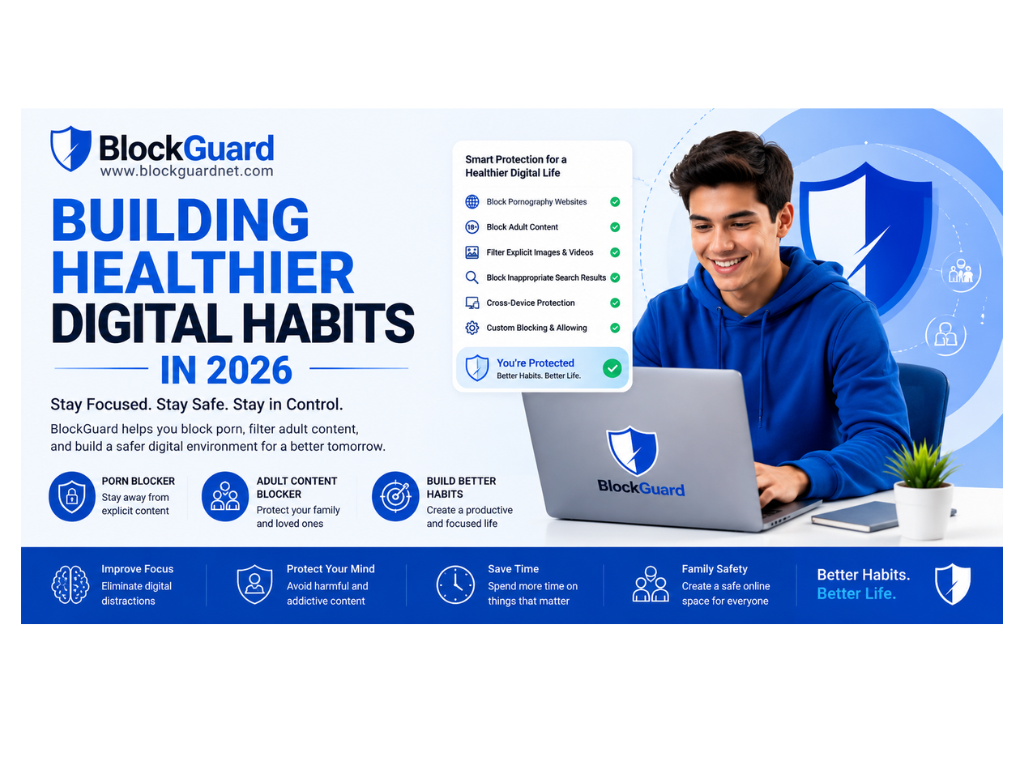
    Building Healthier Digital Habits in 2026: How the Best Porn Blocker Can Transform Your Online Life


    The Problem: Why Your Digital Habits Are Harming Your Mental Health

    You check your phone first thing in the morning. You scroll through social media during work breaks. You watch videos late into the night. And somewhere in between, you might accidentally—or intentionally—stumble upon content that leaves you feeling drained, distracted, or ashamed.

    If this sounds familiar, you’re not alone. In 2024, the Oxford English Dictionary named “brain rot” its word of the year, defining it as “the supposed deterioration of a person’s mental or intellectual state” caused by overconsumption of trivial online content . The term actually dates back to 1854, when Henry David Thoreau wrote: “While England endeavours to cure the potato rot, will not any endeavour to cure the brain-rot—which prevails so much more widely and fatally” .

    Today, with 5.45 billion internet users worldwide, the problem has only intensified . Research shows that in 2004, people spent an average of 150 seconds on a task before switching focus. By 2022, that number had plummeted to just 47 seconds . The constant connectivity that technology provides comes at a steep cost: digital addiction, anxiety, depression, diminished sleep quality, and fractured relationships .

    But there is hope. A growing movement is helping people build healthier digital habits—and the best porn blocker is often the first and most effective tool in this journey.

    What You’ll Learn in This Guide:

    • What digital wellbeing really means and why it matters
    • How explicit content affects your brain and mental health
    • 7 proven strategies to build healthier digital habits
    • How the best adult content blocker fits into your digital wellness plan
    • Step-by-step guidance for protecting your family online

    What Is Digital Wellbeing?

    Digital wellbeing is a comprehensive framework that encompasses the attitudes, behaviors, practices, and strategies needed for balanced and conscientious technology use . It recognizes that while technology offers incredible benefits—access to information, connection with loved ones, productivity tools—it also poses serious risks when used without intention .

    According to the Mental Health Commission of Canada, digital wellbeing isn’t about quitting technology cold turkey. Instead, it’s about designing your digital diet based on your life context to find a sustainable balance . Think of it like nutrition: you don’t eliminate all food, but you make conscious choices about what you consume.

    The Four Pillars of Digital Wellbeing

    1. Mindful Technology Use
    This means being conscious of how, when, and why you use digital devices . Are you reaching for your phone out of boredom, anxiety, or genuine need? Mindfulness creates the mental gap between urge and action, allowing you to make better choices .

    2. Mental and Physical Health
    Excessive screen time is linked to anxiety, depression, stress, eye strain, poor posture, and disrupted sleep . The best porn blocker helps protect your mental health by reducing exposure to content that triggers compulsive behavior.

    3. Work-Life Balance
    Technology blurs the boundaries between work and personal life, often leading to burnout and chronic stress . Setting boundaries—like no devices in the bedroom or scheduled offline hours—is essential for recovery .

    4. Healthy Online Interactions
    Social media can foster connection but also fuels unhealthy behaviors like social comparison, cyberbullying, and online harassment . A reliable adult content blocker helps filter out harmful content, creating a cleaner digital environment.


    How Explicit Content Impacts Your Brain

    Understanding the neuroscience of porn addiction helps explain why the best porn blocker is so essential for building healthier digital habits.

    Dopamine Overload
    Pornographic content triggers an intense dopamine reward in the brain. Over time, your brain becomes tolerant to this dopamine, requiring more extreme content to achieve the same high. This is the same mechanism that drives addiction to drugs, gambling, and sugar.

    Compulsive Behavior
    As your brain’s reward pathways get rewired, you start experiencing cravings for porn even when you don’t want to watch it. You feel helpless against the habit loop, and real-life relationships, work, and friendships begin to take a backseat.

    Withdrawal Symptoms
    When you try to quit, you may experience anxiety, depression, irritability, and intense cravings. This is why willpower alone rarely works—you need a system that removes the temptation entirely.

    The Solution: A Porn Blocker That Actually Works
    The best adult content blocker interrupts this cycle by removing easy access to porn. Instead of relying on willpower in moments of weakness, you create a digital environment where the choice is already made for you.


    7 Proven Strategies to Build Healthier Digital Habits

    Strategy 1: Install a Powerful Porn Blocker

    This is the most important step for anyone serious about building healthier digital habits. The best porn blocker removes the option before you’re tested, making the right choice the path of least resistance .

    What to Look For in a Porn Blocker:

    • AI-powered filtering that catches new adult sites that static blocklists miss 
    • SafeSearch enforcement to filter explicit search results
    • Incognito mode protection to prevent bypassing
    • Uninstall prevention and password protection
    • Cross-platform support for all your devices
    • Distraction blocking for Shorts, Reels, and TikTok 

    Recommended Solution: BlockGuard offers completely free, AI-powered protection with all these features and more.

    👉 Install BlockGuard Chrome Extension for Free
    👉 Download BlockGuard Android App


    Strategy 2: Create Screen-Free Times and Places

    One of the most effective ways to build healthier digital habits is establishing clear boundaries around technology use .

    What Experts Recommend:

    • No devices at the dinner table—this creates space for meaningful family conversation
    • No devices in the bedroom—this improves sleep quality and intimacy 
    • Unplug at least one hour before bed—blue light disrupts melatonin production
    • Set do-not-disturb times on your devices 
    • Use Airplane Mode to mute all notifications during focused work 

    Real-Life Example: One colleague stopped using their phone for basic functions because “once you pick it up, it becomes a vortex of notifications.” They replaced their phone with an alarm clock, a calculator, and a flashlight .


    Strategy 3: Practice the “Sunshine Before Screen Time” Rule

    Starting your day with screen-free activities sets a positive tone for the rest of your day .

    Ideas for Morning Routines:

    • Go for a walk or exercise
    • Read a physical book
    • Journal with pen and paper
    • Meditate or practice mindfulness
    • Have breakfast without devices

    Why It Works: Morning screen use triggers the dopamine cycle before your brain has had a chance to wake up naturally. By delaying your first screen interaction, you regain control over your attention.


    Strategy 4: Replace Screen Time with Analog Activities

    The antidote to digital overload is physical-world engagement .

    Screen-Free Hobbies to Try:

    • Walking the dog—”whatever the weather” 
    • Gardening—one person said they “can disappear for hours in the garden, and it feels like minutes” 
    • Reading physical books—”curl up with a good book and a hot cup of tea” 
    • Handcrafting—making miniatures, painting, or pottery
    • Board games and crossword puzzles—with the help of a dictionary 
    • Yoga and meditation—”being present in every moment on the mat brings unexpected insights” 

    The Science: When you engage in flow-state activities (where you’re fully immersed and lose track of time), you experience the same dopamine release—but without the addiction risk .


    Strategy 5: Use Accountability and Consequences

    Creating external accountability dramatically increases your chances of success .

    Proven Accountability Techniques:

    • Financial penalties: One professor struggled with procrastination, so he and a colleague agreed that if they didn’t stick to their writing schedule, they’d donate money to a cause they disliked 
    • Group rules: A friend group has a rule—the first person who checks their phone at dinner pays for drinks 
    • Accountability partners: Share your goals with someone you trust and ask them to check in regularly
    • No Social November (NoSo): This grassroots challenge encourages students to take a month-long break from social media 

    Why It Works: External consequences activate the brain’s reward system differently than internal motivation. You’re more likely to follow through when others are involved.


    Strategy 6: Practice “Unhashing” Your Life

    There’s a campaign in Vienna called “Unhashtag Vienna” that encourages tourists to enjoy the city without constantly documenting it .

    How to Apply This to Your Life:

    • Leave your phone at home when running errands 
    • Take photos only for yourself, not for social media
    • Enjoy moments without the lens of a smartphone camera
    • Practice “presence without the extra knowledge”—just enjoy the TV show without Googling every detail about the characters 

    The Benefit: When you stop documenting everything, you start actually experiencing it. This builds presence, reduces anxiety, and deepens your relationships.


    Strategy 7: Talk About Digital Habits as a Family

    The American Academy of Pediatrics emphasizes that building healthier digital habits is a family activity, not just an individual one .

    Conversation Starters for Families:

    • “What do you like about social media platforms?”
    • “How do you feel when you’re on social media?”
    • “Have you seen anything concerning online?”
    • “What’s real and what’s edited or fake?”
    • “How does media affect your emotions?” 

    Set a Good Example: When your attention is on your device, tell your kids what you’re doing. Be kind to others online and talk about how you’re using media for good .

    Create a Family Media Plan: Work together to set rules about social media use so everyone agrees on how devices fit into your lives .


    How a Porn Blocker Supports All These Strategies

    You might wonder: “How does a porn blocker help me build healthier digital habits?” Here’s how:

    1. It removes temptation so you don’t have to rely on willpower alone
    2. It blocks distractions like adult content and addictive short-form videos
    3. It creates friction around impulsive behavior, giving you time to make better choices
    4. It protects your family from accidental exposure to harmful content
    5. It supports focus by reducing digital clutter

    The best adult content blocker doesn’t just block porn—it creates an environment where healthier digital habits can flourish.


    Comparison: Top Porn Blocker Features That Support Digital Wellbeing

    FeatureWhy It MattersBlockGuard
    AI-Powered FilteringCatches new adult sites static lists miss✅ Yes
    SafeSearch EnforcementFilters explicit search results✅ Yes
    Incognito ProtectionPrevents private mode bypass✅ Yes
    Uninstall PreventionStops impulsive disabling✅ Yes
    Password ProtectionSecures settings from tampering✅ Yes
    Block Shorts/ReelsReduces addictive scrolling✅ Yes
    Free ForeverAccessible to everyone✅ Yes

    Expert Recommendations for Building Healthier Digital Habits

    “Small, consistent actions—not willpower alone—create lasting change. A porn blocker removes the option before you’re tested, making the right choice the path of least resistance.”

    “In 2024, people spent an average of 47 seconds on a task before switching. To reclaim your attention, start with screen-free mornings and scheduled offline time.” 

    “Digital wellbeing isn’t about quitting technology—it’s about designing your digital diet based on your life context.” 


    Frequently Asked Questions

    What is the best porn blocker for building healthier digital habits?

    The best adult content blocker combines AI-powered filtering, SafeSearch enforcement, incognito protection, and uninstall prevention. BlockGuard offers all these features completely free.

    How does a porn blocker help with digital addiction?

    By removing easy access to triggers, a porn blocker breaks the habit loop. Instead of relying on willpower, you create an environment where healthier choices are automatic.

    Can I block porn on Chrome for free?

    Yes. BlockGuard offers a completely free Chrome extension that blocks adult websites, enforces SafeSearch, and prevents bypassing through incognito mode.

    What’s the difference between a porn blocker and SafeSearch?

    SafeSearch only filters search results. A porn blocker blocks adult websites directly, enforces SafeSearch, filters explicit images, and prevents access through private browsing modes.

    How can I protect my children from online adult content?

    Use a combination approach: a reliable adult content blocker like BlockGuard, Google Family Link for activity management, OpenDNS for network-level protection, and open family conversations about online safety .

    Does using a porn blocker slow down my browser?

    No. Modern porn blockers like BlockGuard are lightweight and optimized for performance. They run efficiently in the background without impacting browsing speed.


    Conclusion: Your Journey to Healthier Digital Habits Starts Today

    Building healthier digital habits isn’t about perfection—it’s about progress. It’s about making small, consistent choices that add up to lasting change.

    The best porn blocker is an essential tool in this journey. It removes temptation, creates friction around impulsive behavior, and protects your family from harmful content. But it works best when combined with the other strategies in this guide: screen-free times, analog activities, accountability, and open family conversations.

    Your Next Steps:

    1. Install a powerful porn blocker on all your devices
    2. Create screen-free times and places in your home
    3. Practice “sunshine before screen time” in your morning routine
    4. Replace screen time with flow-state analog activities
    5. Use accountability to stay on track
    6. Talk about digital habits as a family
    7. Celebrate your progress—every step forward counts

    Ready to get started?

    👉 Install BlockGuard Chrome Extension for Free
    👉 Download BlockGuard Android App
    👉 Explore More Digital Wellness Resources at BlockGuard Blog


    Related Articles


  • Benefits of No Nut November: What Happens When You Don’t Ejaculate for 7 Days?

    Benefits of No Nut November: What Happens When You Don’t Ejaculate for 7 Days?

    If you’re searching for the benefits of No Nut November, you’re probably wondering whether avoiding ejaculation for a month actually changes anything—or whether the claims about testosterone, energy, focus, and “semen retention” are mostly internet hype.

    The short answer is more interesting than either extreme. No Nut November may be useful as a personal challenge, especially if it helps you notice or change a habit involving pornography or frequent masturbation. But there isn’t strong evidence that simply avoiding ejaculation for seven or thirty days produces a universal set of physical health benefits.

    So what actually happens? We’ll look at the first seven days, what longer abstinence may change, whether masturbation is healthier than abstinence, how sperm production works, and whether there is any medically ideal ejaculation frequency. The goal isn’t to tell you whether you should participate in NNN. It’s to separate what we know from what gets exaggerated online.

    What Are the Benefits of No Nut November?

    The potential benefits of No Nut November are not necessarily the biological benefits people often promise. For some people, the biggest value is stepping away from an automatic habit and paying attention to what happens when they change it.

    For example, someone who normally masturbates while scrolling through pornography late at night may discover that the real issue isn’t ejaculation itself. It’s the hour of browsing that comes before it. Removing that routine can create more time for sleep, studying, exercise, work, or other things they actually want to be doing.

    That distinction matters because No Nut November is a challenge, not a medical treatment. There is no established rule that says a man becomes healthier after exactly seven, fourteen, or thirty days without ejaculating.

    There may also be a psychological benefit to completing a challenge you deliberately chose. If you’ve been doing something automatically, even a temporary pause can make you more aware of your triggers, routines, and reasons for doing it.

    But that doesn’t mean every popular NNN claim is true. Claims about dramatic testosterone increases, guaranteed confidence, massive energy gains, or special physical powers go beyond what current evidence can establish.

    So the useful question isn’t just, “How long can I avoid ejaculation?” It’s “What am I trying to change?”

    If your goal is simply to test your self-control, NNN can be a personal experiment. If your actual goal is to reduce pornography, compulsive browsing, or a sexual habit that is interfering with your life, the challenge becomes much more meaningful when you address the behavior around ejaculation—not just ejaculation itself.

    That becomes clearer when you look at what the first week actually involves.

    What Happens After 7 Days of Not Ejaculating?

    Imagine you’ve gone from ejaculating regularly to making it through an entire week without doing so. You may notice changes in your urges or routine, but there is no scientifically established seven-day transformation that happens to every man.

    Physically, your body doesn’t suddenly switch into a special “retention mode.” Sperm production continues, and the reproductive system keeps doing what it normally does. You may experience stronger sexual urges, spontaneous erections, sexual dreams, or simply nothing particularly noticeable. People vary.

    The behavioral side can be more obvious. If masturbation or pornography was part of a daily routine, removing it creates a gap in your schedule. What fills that gap can influence how useful the challenge feels.

    Someone who uses that time to sleep more, exercise, study, or spend time away from their phone may feel better during the week. But it would be a mistake to automatically credit those improvements to “retaining semen.” The change may have come from the new routine.

    There is also no requirement that you feel dramatically different after seven days. You might feel more focused. You might feel more frustrated. You might feel exactly the same. None of those experiences, by themselves, prove that abstinence is helping or harming you.

    Once the first-week question is separated from the bigger health claims, another question naturally follows: is abstaining actually healthier than masturbating?

    Is It Healthier to Masturbate or Not?

    Most people assume there must be a winner: either masturbation is healthy and abstinence is unnecessary, or avoiding masturbation is healthier because ejaculation supposedly drains something important from the body. Neither view captures the evidence very well.

    Cleveland Clinic describes masturbation as a normal part of sexual development and notes that it may reduce stress, ease tension, and improve sleep. That doesn’t mean everyone needs to masturbate, either. It means masturbation itself isn’t generally considered harmful for healthy adults.

    Choosing not to masturbate is also a perfectly reasonable personal decision. Someone may abstain for personal discipline, relationship reasons, to reduce pornography use, or simply because they don’t feel like doing it.

    The more useful question is whether the behavior is interfering with your life.

    If someone masturbates occasionally and it doesn’t interfere with sleep, work, relationships, responsibilities, or sexual function, there isn’t a medical reason to assume that abstinence would automatically be healthier. On the other hand, if someone feels unable to control a behavior, spends hours looking for pornography, repeatedly ignores responsibilities, or continues despite negative consequences, changing that pattern may be worthwhile.

    That’s why frequency alone can be misleading. Two people could masturbate the same number of times per week while having completely different relationships with the behavior.

    One person may treat it as a normal part of their private sexual life. Another may feel trapped in a cycle of pornography, masturbation, regret, and repetition. The number doesn’t tell you which situation you’re looking at.

    So NNN doesn’t need to prove that masturbation is bad to be useful. It can simply give someone a period in which they step back and examine their habits.

    That leads to an even simpler question: what if someone chooses not to masturbate at all?

    Is It Healthy to Never Masturbate?

    The fact that masturbation is generally normal doesn’t mean you have to do it. Some people never masturbate, and not masturbating is not automatically a sign that something is wrong.

    There isn’t a universal requirement for a healthy man to masturbate a certain number of times. Sexual desire varies widely, and so does sexual behavior. Some people have a high sex drive, some have a low one, and some go through periods where they have little interest in sexual activity.

    Problems arise when abstinence is treated as a guarantee of superior health—or when masturbation is treated as automatically unhealthy. Neither conclusion follows simply from the decision to ejaculate or not ejaculate.

    If you choose not to masturbate and feel comfortable with that decision, there is no reason to manufacture a health problem where there isn’t one. If you’re avoiding masturbation because you’re trying to change a pornography habit, however, it can be useful to look at the larger pattern rather than treating ejaculation as the only thing that matters.

    That becomes especially relevant when people imagine that sperm somehow builds up indefinitely during long periods of abstinence.

    How Long Does It Take for Sperm to Fully Refill?

    There isn’t a simple refill timer because the body doesn’t work like a tank that becomes empty and then fills back up after ejaculation. Sperm production is ongoing, while semen is made from sperm plus fluids from several reproductive glands.

    Abstinence can change what appears in a semen sample, though. A systematic review indexed by PubMed found that longer periods of abstinence were associated with increases in semen volume and sperm count, while findings for motility, morphology, and DNA fragmentation were more complicated.

    A 2024 meta-analysis of randomized controlled trials found a similar trade-off: longer abstinence was associated with greater sperm concentration and semen volume, but also higher sperm DNA fragmentation and lower progressive sperm motility. The study included 13 trials and 2,315 participants.

    That’s why “fully refill” is a misleading way to think about it. The body is continuously producing sperm. The amount and characteristics of semen and sperm can change depending on how long it has been since the last ejaculation, but that doesn’t mean your body is progressively storing a valuable substance that becomes healthier the longer you keep it.

    This matters if your goal is fertility, too. Someone preparing for a semen analysis or fertility treatment may receive specific instructions about abstinence, and those instructions are not the same thing as a recommendation that every man should avoid ejaculation for as long as possible.

    Research on abstinence and semen quality is complicated enough that there is no universal “perfect” abstinence period for every situation.

    How Often Should a Man Ejaculate?

    There are two common assumptions here, and neither is quite right: that men need to ejaculate on a regular schedule, or that fewer ejaculations automatically mean better health. In reality, there is no medically required number of times a man should ejaculate each week.

    A claim such as “every man should release sperm three times a week” sounds precise, but biology doesn’t work according to a universal weekly quota.

    Daily ejaculation is not automatically unhealthy for most people, just as going several days without ejaculating is not automatically unhealthy. The right frequency depends on the individual and whether sexual activity is comfortable and compatible with the rest of their life.

    Research on ejaculation frequency and long-term health also needs to be interpreted carefully. Some observational studies have found associations between more frequent ejaculation and lower prostate cancer risk, but an association does not prove that ejaculating more prevents cancer. That evidence is not a basis for prescribing an ejaculation schedule.

    There is an important difference between sexual health and fertility testing here. If you’re trying to conceive or undergoing fertility evaluation, the timing of ejaculation can affect semen measurements. That’s a very different question from asking how often a healthy man should masturbate in everyday life.

    And “How long should I wait for round two?” is different again. The recovery period after orgasm varies considerably between people and can depend on age, arousal, stimulation, and other factors. There isn’t one correct waiting time.

    So if you’re doing NNN because you believe there is a magic number of days that maximizes health, the evidence doesn’t give you one.

    What Are the Benefits of Going Beyond 7 Days?

    Once someone gets through a week, it’s natural to wonder whether thirty days will produce something bigger. But a longer streak isn’t automatically a healthier one simply because the number on the calendar is larger.

    Thirty days can give someone more time to observe when urges appear, what triggers them, and what they tend to do in response. If pornography was part of the routine, a longer break may also reveal how much time and attention that routine was consuming.

    Physically, there isn’t good evidence for a universal “30-day benefit” that every participant should expect. Research on semen parameters shows why simple claims are risky: longer abstinence can increase some measurements while worsening others.

    That doesn’t make a thirty-day challenge pointless. It changes what you should measure. Instead of asking, “How much semen did I retain?” you could ask whether you’re sleeping better, spending less time on pornography, concentrating more easily, or feeling more in control of a habit you wanted to change.

    Those outcomes are more useful because they relate directly to the reason you started the challenge.

    Can No Nut November Help You Change a Porn or Masturbation Habit?

    Once the focus shifts from semen to behavior, the challenge becomes more practical. A defined period of abstinence can create enough distance from an automatic routine to make its triggers easier to notice.

    Consider someone who reaches for pornography whenever they’re bored, stressed, lonely, or lying in bed with their phone. If they remove masturbation for a month but leave every trigger untouched, the challenge can become a daily battle of willpower.

    Change the environment, though, and the problem can look very different.

    This is especially relevant when pornography is the trigger. If sexual content is only a few taps away, every urge becomes a decision point. If access is restricted, the automatic loop has an extra barrier in front of it.

    This is the kind of situation where BlockGuard can be useful. It blocks adult websites automatically using an auto-updating list plus keyword-based detection, so new or unlisted adult sites can still be caught instead of relying only on a fixed list.

    That doesn’t make BlockGuard a treatment for compulsive sexual behavior, and it doesn’t mean someone needs a blocker simply because they masturbate. If easy access to pornography is the part of the habit you’re trying to change, reducing that access can remove one of the triggers you’re repeatedly having to resist.

    With that goal in mind, the challenge becomes less about proving how long you can abstain and more about understanding the routine you’re trying to change.

    How to Approach No Nut November Without Falling for Health Myths

    If you want to try NNN, the most useful approach is to treat it as a behavior experiment rather than a race to accumulate as many ejaculation-free days as possible.

    1. Decide what you’re actually trying to change. If your goal is better focus, less pornography, fewer late-night browsing sessions, or more control over an unwanted habit, write that down. “Retain semen” is much less useful as a measurable goal because it doesn’t tell you what improvement you’re looking for.
    2. Identify your triggers before the challenge gets difficult. Notice when the habit usually happens. Is it boredom, stress, loneliness, late-night phone use, social media, or pornography? Knowing the trigger gives you something concrete to change.
    3. Replace the routine instead of leaving an empty space. If you normally spend an hour browsing at night, decide what happens during that hour instead. Exercise, reading, studying, talking to friends, or simply going to bed earlier can be more useful than sitting there trying not to think about sex.
    4. Track what actually changes. Pay attention to sleep, concentration, screen time, mood, urges, and the amount of time spent on pornography. Don’t assume every change is caused by semen retention. Look at the whole routine.
    5. Don’t turn a slip into a verdict about your health. If you break the challenge, it doesn’t mean you’ve damaged your body or lost some mysterious biological advantage. Look at what triggered the behavior and decide what you want to do next.

    The point isn’t to prove that you can suppress a normal bodily function indefinitely. It’s to learn whether changing a behavior makes your life better.

    If Pornography Is the Trigger, BlockGuard Can Help

    If your No Nut November goal is really about getting away from pornography, reducing access to triggers may be more useful than relying on willpower every time an urge appears. BlockGuard is built for that narrower problem: helping people put friction between themselves and adult or distracting websites.

    • Custom website controls: You can decide exactly which distracting or triggering sites are off-limits instead of relying only on a predefined list.
    • Password and accountability protection: Password-protected settings and an accountability-partner option add built-in friction when you’re tempted to change your setup.
    • Social-media controls: You can target scroll-heavy features such as Instagram Reels or YouTube Shorts rather than treating every part of social media as equally distracting.
    • Focus sessions: Timer-based focus mode gives you a structured period for work or study and a way to see your progress afterward.

    If reducing digital triggers is part of your No Nut November goal, BlockGuard can help make those triggers harder to reach.

    Frequently Asked Questions

    What’s a trick to last longer in bed?

    There isn’t one trick that works for everyone. Sexual performance can be affected by anxiety, arousal, stimulation, relationship factors, and physical or psychological conditions. If premature ejaculation is persistent and causing distress, it’s better to discuss it with a healthcare professional than assume that avoiding ejaculation for a certain number of days will solve it.

    How long should you wait for round 2?

    There is no universal waiting period. After orgasm, many men experience a refractory period during which another erection or orgasm is temporarily more difficult. Its length varies considerably between individuals and can change with age, arousal, stimulation, and other factors.

    Is releasing sperm daily good?

    Daily ejaculation is not automatically unhealthy for most people, and there is no medical requirement to ejaculate every day. If it is comfortable and isn’t interfering with your responsibilities, relationships, sleep, or sexual function, frequency alone doesn’t make it a problem.

    What happens if I go a week without ejaculating?

    You may notice stronger sexual urges, spontaneous erections, sexual dreams, or no major difference at all. Sperm production continues during abstinence, but there is no established seven-day health transformation that everyone experiences.

    Is it normal to never masturbate?

    Yes. People vary widely in sexual desire and behavior, and not masturbating is not automatically unhealthy. The important question is whether your sexual behavior—or lack of it—is comfortable for you and consistent with your own goals and values.

    Conclusion

    The benefits of No Nut November are easier to understand when you stop treating ejaculation as something that must either be “saved” or released according to a perfect schedule.

    For some people, NNN can be a useful month-long experiment. It can create distance from an automatic masturbation routine, expose pornography triggers, free up time, and help someone decide whether a habit is actually serving them. Those are meaningful things to examine.

    What the evidence doesn’t establish is a universal biological reward for avoiding ejaculation for seven or thirty days. Masturbation is generally considered a normal part of sexual health, and research on ejaculatory abstinence shows that different semen parameters can respond differently to longer or shorter periods.

    So if you try NNN, measure something meaningful. Ask whether you’re sleeping better, using pornography less, spending less time scrolling, concentrating more easily, or feeling more in control of your choices.

    That’s a much more useful experiment than simply watching the calendar and waiting for a transformation that science hasn’t promised.